Revolutionary Misfit

Dare to be Inspirational

  • Impact Mindfulness
    • The Movement
    • Impact over Interest
    • The Big US
    • Removing Impact Blinders
    • People Planet Universe
    • Revolutionary Misfit Creed
  • The Blog & Podcast
    • Blog Archive
    • World Changers Expat Podcast
    • The LA County Jail Series
    • Costa Rica Expat Tours
    • About the Author
  • Books
    • The Rev Misfit Manifesto
    • The Impact Revolution
    • Expat Mindfulness – The Book
    • Definitive Guide to CR Expat Living

Ubuntu – Impact Mindfulness in a Word

December 15, 2013 by costaricaguy 1 Comment

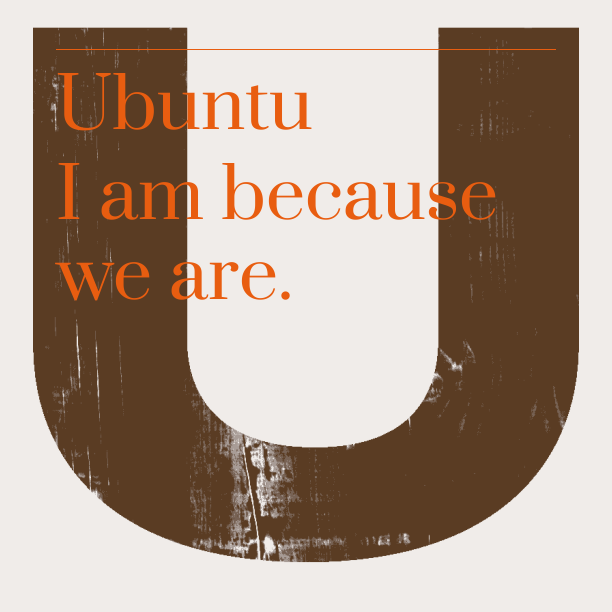
Ubuntu - Impact Mindfulness in a Word

There is a word in South Africa — Ubuntu — a word that captures Mandela’s greatest gift: his recognition that we are all bound together in ways that are invisible to the eye; that there is a oneness to humanity; that we achieve ourselves by sharing ourselves with others, and caring for those around us.

President Barack Obama
during Nelson Mandela’s Memorial Service

Have you heard of Ubuntu? I believe it is a perfect one word description of the concept of impact mindfulness. So, if you haven’t heard of it, I encourage you to read on and learn with me what this interesting word really means.

Admittedly, until I listened to Barack Obama’s speech at the memorial service for Mandela last week, I had never heard of Ubuntu. Since then I have learned that it is a word in the Nguni Bantu language, a philosophy and also the name of a Linux-based operating system.

Mandela would certainly be very familiar with the term. After all he was born into the Thembu tribe of the Xhosa ethnic group. The Xhosa are part of the South African Nguni migration which slowly moved from the region around the African Great Lakes into South Africa some 2,000 years ago. Therefore, the term is buried deep within Mandela’s ethnic heritage.

Mandela was once interviewed (see video embed below) and asked about Ubuntu. I especially like what he said in the following quote…

Ubuntu does not believe that people should not address themselves. The question therefore is, are you going to do so in order to enable the community around you to improve. These are the important things in life. And if one can do that, then that is something very important and to be appreciated.

I also remember hearing someone say (may also have been in Obama’s speech?) something to the effect that rather than the Western philosophical idea of Descartes, cogito ergo sum, or “I think therefore I am”, Ubuntu declares, “I am because we are.”

In other words, the individual draws his or her own unique expression of humanity from the very existence of the community to which he or she belongs.

It would seem, therefore, that Ubuntu is a one-word description of a philosophy that embraces collectivism, but does not do so at the expense of individualism, as long as individualistic action is beneficial to society at large.

And it seems to have been the philosophy that served as a driving force behind Mandela’s selfless action. Actions that freed the South African black community from the oppression of Apartheid, but also united the South African community as a whole, both black and white, together with all the other “colors” that made up the “Rainbow Nation.”

You see, Mandela didn’t have to do it that way, but he did…and maybe Ubuntu was the selfless idea that caused the angry man that entered Pollsmoor to emerge almost three decades later as one of history’s greatest reconciliators.

Tim Jackson, who is a British ecological economist and professor of sustainable development at the University of Surrey and author of the book, Prosperity Without Growth, refers to Ubuntu as a philosophy that supports the changes that are necessary to create a future that is economically and environmentally sustainable.

And during the hate speech trial of the former President of the ANC Youth League, Julius Malema, Judge Colin Lamont expanded on the definition in his judgment of guilt by writing that…

Ubuntu is a concept which:

  1. is to be contrasted with vengeance;
  2. dictates that a high value be placed on the life of a human being;
  3. is inextricably linked to the values of, and which places a high premium on, dignity, compassion, humaneness and respect for the humanity of another;
  4. dictates a shift from confrontation to mediation and conciliation;
  5. dictates good attitudes and shared concern;
  6. favors the re-establishment of harmony in the relationship between parties and that such harmony should restore the dignity of the plaintiff without ruining the defendant;
  7. favors restorative rather than retributive justice;
  8. operates in a direction favoring reconciliation rather than estrangement of disputants;
  9. works towards sensitizing a disputant or a defendant in litigation to the hurtful impact of his actions to the other party and towards changing such conduct rather than merely punishing the disputant;
  10. promotes mutual understanding rather than punishment;
  11. favors face-to-face encounters of disputants with a view to facilitating differences being resolved rather than conflict and victory for the most powerful;
  12. favors civility and civilized dialogue premised on mutual tolerance.

Summing up the above in a way that is relevant to this blog, Ubuntu seems to be a philosophy that declares…

  1. one should prioritize actions for sustaining the community (or utility, i.e., the greater good) over self-interest…
  2. we are indeed all in this boat together and our actions should recognize and support that fact (The Big Us)…
  3. and individualistic (or ego-driven) notions to the contrary should be discarded (removing Impact Blinders).

Therefore, it is a word, as well as a way of thinking, that you’ll be reading about more here in the future.

Filed Under: The Big US Tagged With: mandela, ubuntu

Impact as the Before Not Afterthought

December 12, 2013 by costaricaguy 1 Comment

Impact as the Before Not Afterthought

I have been on a blog reading tear this entire year. I follow some really good ones. They tell me how to write better, or how to de-clutter and be mindful, or how to tap the creative genius that lies within. The underlying why is generally the pursuit of self fulfillment and success. Most are written by this new generation of career rebels who have gained a measure of fame and fortune by creative content shared online via the multitude of mediums that now exist.

And without exception there will be the occasional post that says something along the lines of, “psst…want to know the real secret of happiness and fulfillment…it’s impact…making a real positive difference for others.”

Okay, thanks for that. But if that’s the “real secret”, then why all the other stuff?

Because even though we know deep down that it is, we’d rather treat impact as an afterthought…or a byproduct along the road to success in whatever endeavor the blog is attempting to inspire.

But this blog is different. Revolutionary Misfit is not about motivating you to donate time at the soup kitchen, or point you toward any other mode of impact, or instruct you on how to do any of those things. That’s for you to decide and learn. Of course, if you have a passion to help the homeless, then donating time at the soup kitchen is a great way to have an impact. But it’s a personal choice only you can make.

No, this blog is about a change in mindset. You see, I believe “America” (I put that term in quotes because according to The Big US, it actually encompasses much more territory than the 50 U.S. states) is suffering from a disease of self-interest. It’s called “pursuit of the American Dream.” It sounds great…patriotic…almost makes you want to stand up, slap your hand over your heart and belt out the national anthem.

But there’s actually an insidious problem with it.

Below is a quote I read from a piece in Andrew Sullivan’s excellent and thought-provoking blog, The Dish. The piece was entitled What Inspires Altruism?…

Research indicates that money makes people more individualistic and less altruistic. In other words, as societies become wealthier, their citizens become more individualistic and depend less upon one another. Self-interest becomes the norm.

I don’t know about you, but for me that rings particularly true. I know it did in my own life for a long time.

This blog sets forth a novel idea for a concept called impact mindfulness. And impact mindfulness is a practice that suggests the opposite of what the quote states is the norm…it puts impact over self-interest. It promotes impact as the before not afterthought.

And it also suggests removing things that get in the way of our noticing universal calls to impact. Things like “small us” thinking and “impact blinders.”

In short, it is a mindset and a worldview…not a how-to, but a why-to.

Because I believe once we adopt this revolutionary mindset and it filters through the daily aspects of our lives, then exciting things will begin to happen.

And here’s the thing…there are plenty of historical examples of heroes whose lives exemplified this very concept. And they are some of the most beloved and famous among humanity.

On Tuesday of this week, December 10, four US presidents, royals, the pope, movie, rock and film stars and leaders from over 90 countries gathered with South Africans to celebrate the life of Nelson Mandela in Johannesburg.

Mandela did nothing to seek fame or fortune (quite the opposite as his actions landed him over a quarter decade in prison)…his impetus was impact…pure and simple. And yet he is one of the most famous and beloved human beings that ever walked our planet.

The universe works in mysterious ways, doesn’t it?

So while all those other blogs continue to discuss ways to get your slice of the “American” fame and fortune pie…this one will drone on about impact…

pure and simple.

photo credit: Rob – Road-Quest.com via Compfight cc

Filed Under: Impact over Interest Tagged With: impact over interest, Nelson Mandela, the big us

Impact Mindfulness and Fitness

December 10, 2013 by costaricaguy Leave a Comment

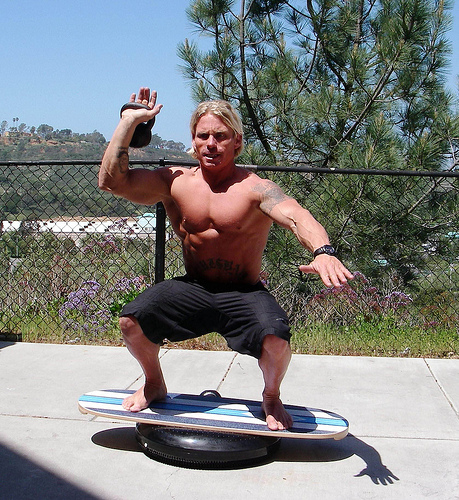
impact mindfulness and fitness

I really don’t believe the world needs one more fitness program. It’s already a pretty crowded field.

Nevertheless, I caught Rockstar Pastor Rick Warren on Pierce Morgan last night touting his…you guessed it…fitness program. I like Rick Warren. He’s certainly to the far right of me when it comes to world view, but he is so damn nice about it. He doesn’t strike me as the typical Tony Horton fitness guru. His program of course has a decidedly spiritual bent to it. The name is, The Daniel Plan (as in the book of Daniel in the Old Testament, which I always thought was more about forecast than fitness).

The program is broken down into components that are all words that begin with the letter F…Faith, Food, Fitness, Focus and Friends…but there is one thing for sure, the real intent is to eliminate that dreaded Big F…FAT.

Fitness…Food…Fat…you know they all do begin with the letter F, so maybe Rick is indeed on to something here.

But really, let’s face it, up until the age of, say, 55 (and no, I ain’t there quite yet), the prime motivator for staying fit doesn’t start with an F, but an S…Sex. We strive for fitness in order to look sexier and perhaps to have a little more of it.

Then we pass that age threshold where fitness becomes more about P…Preservation. That is, preserving, or adding, a few more years to the dwindling duration of our existence.

We also know that fitness can increase our E…Energy. And that’s a good thing.

Continuing with this annoyingly alliterative post, this morning I wanted to talk about a novel motivator for fitness…one that starts with…yep, you guessed it…I.

This blog is not going to devolve into telling you how to stay Fit for Impact, even though that does sound like a course that might sell. But it will tell you this and that is that you have one prime tool at your disposal and control for producing impact…YOU…that is, your brain and body.

You have one prime tool at your disposal and control for producing impact…YOU…that is, your brain and body.

Here in Costa Rica we tend to drive our cars into the ground. That’s why being a mechanic is a far more nobler profession down here than it is in the U.S. La Poderosa, my faithful Mitsubishi steed, is approaching 200,000 miles. If you converted that into people years, she’s really getting on up there. But I keep her fighting fit by taking good care of her. Only the best stuff goes in so that I get the best output possible at her ripe old age. If I didn’t, she’d be destined for the junk yard by now.

And the junk yard is not the best environment for impact.

Do you get the analogy?

I don’t mean to poo-poo Warren’s Daniel Plan, nor any other of the gazillion guides, gurus, gadgets, gizmos and gotchas that all promise to grant you that glorious state of ultimate fitness in, say, 90 days. But they tend to beg an important question

…WHY?

It’s a lot like those blogs that show us how to make a million online, or blog your way to fame and fortune. But why? Does the world need another millionaire, another famous person, or another set of six-pack abs?

In my humble opinion, NO!

What the world needs is impact…yours.

The main principle of impact mindfulness and fitness is this…a fitter you is a potentially more impactful you.

So just take care of yourself…will ya!

People, Planet and the Universe is depending on it.

Oh, and that might mean LESS time at the gym…

photo credit: Indo Board via Compfight cc

Filed Under: Impact over Interest Tagged With: impact mindfulness and fitness, impact over interest

Pope Francis Nails It with EVANGELII GAUDIUM

December 8, 2013 by costaricaguy 1 Comment

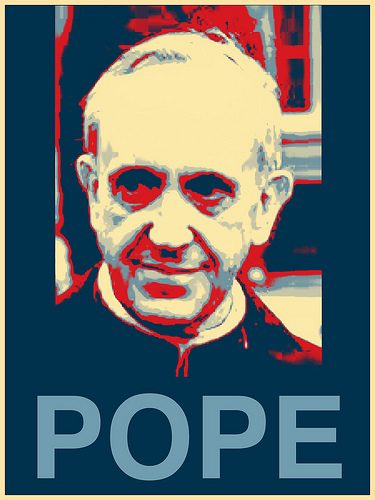
POPE

Today I am posting an excerpt from the recent writing of Pope Francis, entitled, EVANGELII GAUDIUM.

I do this because I believe it echoes a recurring theme of this blog, strikes at the core of the struggle against indifference and offers an inspiring call to impact.

In the words of Pope Francis…

No to an economy of exclusion

Just as the commandment “Thou shalt not kill” sets a clear limit in order to safeguard the value of human life, today we also have to say “thou shalt not” to an economy of exclusion and inequality. Such an economy kills. How can it be that it is not a news item when an elderly homeless person dies of exposure, but it is news when the stock market loses two points? This is a case of exclusion. Can we continue to stand by when food is thrown away while people are starving? This is a case of inequality. Today everything comes under the laws of competition and the survival of the fittest, where the powerful feed upon the powerless. As a consequence, masses of people find themselves excluded and marginalized: without work, without possibilities, without any means of escape.

How can it be that it is not a news item when an elderly homeless person dies of exposure, but it is news when the stock market loses two points?

Human beings are themselves considered consumer goods to be used and then discarded. We have created a “throw away” culture which is now spreading. It is no longer simply about exploitation and oppression, but something new. Exclusion ultimately has to do with what it means to be a part of the society in which we live; those excluded are no longer society’s underside or its fringes or its disenfranchised – they are no longer even a part of it. The excluded are not the “exploited” but the outcast, the “leftovers”.

In this context, some people continue to defend trickle-down theories which assume that economic growth, encouraged by a free market, will inevitably succeed in bringing about greater justice and inclusiveness in the world. This opinion, which has never been confirmed by the facts, expresses a crude and naïve trust in the goodness of those wielding economic power and in the sacralized workings of the prevailing economic system. Meanwhile, the excluded are still waiting. To sustain a lifestyle which excludes others, or to sustain enthusiasm for that selfish ideal, a globalization of indifference has developed. Almost without being aware of it, we end up being incapable of feeling compassion at the outcry of the poor, weeping for other people’s pain, and feeling a need to help them, as though all this were someone else’s responsibility and not our own. The culture of prosperity deadens us; we are thrilled if the market offers us something new to purchase. In the meantime all those lives stunted for lack of opportunity seem a mere spectacle; they fail to move us.

The culture of prosperity deadens us; we are thrilled if the market offers us something new to purchase. In the meantime all those lives stunted for lack of opportunity seem a mere spectacle; they fail to move us.

No to the new idolatry of money

One cause of this situation is found in our relationship with money, since we calmly accept its dominion over ourselves and our societies. The current financial crisis can make us overlook the fact that it originated in a profound human crisis: the denial of the primacy of the human person! We have created new idols. The worship of the ancient golden calf (cf. Ex 32:1-35) has returned in a new and ruthless guise in the idolatry of money and the dictatorship of an impersonal economy lacking a truly human purpose. The worldwide crisis affecting finance and the economy lays bare their imbalances and, above all, their lack of real concern for human beings; man is reduced to one of his needs alone: consumption.

While the earnings of a minority are growing exponentially, so too is the gap separating the majority from the prosperity enjoyed by those happy few. This imbalance is the result of ideologies which defend the absolute autonomy of the marketplace and financial speculation. Consequently, they reject the right of states, charged with vigilance for the common good, to exercise any form of control. A new tyranny is thus born, invisible and often virtual, which unilaterally and relentlessly imposes its own laws and rules. Debt and the accumulation of interest also make it difficult for countries to realize the potential of their own economies and keep citizens from enjoying their real purchasing power. To all this we can add widespread corruption and self-serving tax evasion, which have taken on worldwide dimensions. The thirst for power and possessions knows no limits. In this system, which tends to devour everything which stands in the way of increased profits, whatever is fragile, like the environment, is defenseless before the interests of a deified market, which become the only rule.

In this system, which tends to devour everything which stands in the way of increased profits, whatever is fragile, like the environment, is defenseless before the interests of a deified market, which become the only rule.

No to a financial system which rules rather than serves

Behind this attitude lurks a rejection of ethics and a rejection of God. Ethics has come to be viewed with a certain scornful derision. It is seen as counterproductive, too human, because it makes money and power relative. It is felt to be a threat, since it condemns the manipulation and debasement of the person. In effect, ethics leads to a God who calls for a committed response which is outside the categories of the marketplace. When these latter are absolutized, God can only be seen as uncontrollable, unmanage-able, even dangerous, since he calls human beings to their full realization and to freedom from all forms of enslavement. Ethics – a non-ideological ethics – would make it possible to bring about balance and a more humane social order. With this in mind, I encourage financial experts and political leaders to ponder the words of one of the sages of antiquity: “Not to share one’s wealth with the poor is to steal from them and to take away their livelihood. It is not our own goods which we hold, but theirs”.

I encourage financial experts and political leaders to ponder the words of one of the sages of antiquity: “Not to share one’s wealth with the poor is to steal from them and to take away their livelihood. It is not our own goods which we hold, but theirs”.

A financial reform open to such ethical considerations would require a vigorous change of approach on the part of political leaders. I urge them to face this challenge with determination and an eye to the future, while not ignoring, of course, the specifics of each case. Money must serve, not rule! The Pope loves everyone, rich and poor alike, but he is obliged in the name of Christ to remind all that the rich must help, respect and promote the poor. I exhort you to generous solidarity and to the return of economics and finance to an ethical approach which favours human beings.

image credit: Marc4577 via Compfight cc

Filed Under: The Big US Tagged With: evangelii gaudim, pope francis, the big us

The Final Step of Nelson Mandela

December 6, 2013 by costaricaguy Leave a Comment

the final step of Nelson Mandela

February 11, 1990…I was in the final semester of my third year of law school on that day. I remember seeing the news reports of Nelson Mandela’s release from prison after 27 years of confinement. I really didn’t know that much about him. I did realize that South Africa was on the verge of civil war. And the prevailing view on this predominantly far-right leaning campus was that Mandela’s release would surely catapult the country into all-out bloody chaos. After all, Mandela was a convicted terrorist and a communist.

But we know that’s not what happened.

I am finding it hard to clearly express my feelings about Mandela’s passing yesterday. He is certainly a hero and I feel fortunate to have lived to witness his example. But that’s not good enough.

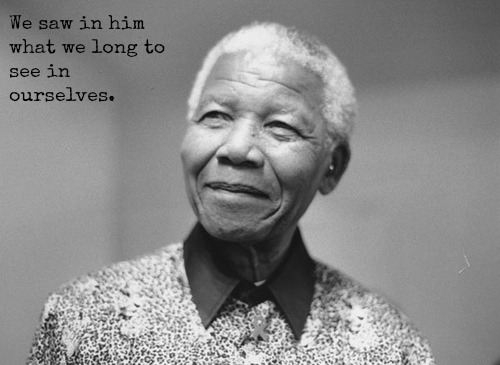
One of the reasons I feel so strongly about this idea for impact mindfulness is the inspiring example of Madiba’s life. I believe his long walk to freedom has valuable lessons for each of the three pillars of IM.

Madiba’s Impact over his Self-Interest

I was listening to CNN coverage of Mandela’s passing last night and one commentator, who knew Mandela well, said something that really made me think. He said that Mandela harbored great resentment towards his persecutors…those who had imprisoned him for so many of his years, killed his friends, oppressed his people and even refused to allow him to attend the funeral of his son. But he buried that resentment under his greater desire to see reconciliation and healing take place for the benefit of all South Africans…and for that to be an example for the entire world. And it indeed was.

If that’s not a shocking display of prioritizing impact over interest, I really don’t know what could possibly be.

Madiba’s Embrace of the Big US

I love the movie Invictus. It is intensely moving and inspiring. Morgan Freeman’s portrayal of Mandela is, as usual for this actor, stellar. If you haven’t seen it…you need to. The movie shows how Mandela used the symbology of South African rugby, a sport that was exclusively patronized by white South Africans, to bring reconciliation for South Africans of all colors.

Mandela was historically elected as South African’s first black president in 1994. A meeting had been convened under the new administration to consider disbanding South African’s national team, the Sprinboks. When Mandela heard of the action to dissolve the team, he quickly made a visit to the place where the vote was taking place and implored that it be re-thought. The team narrowly survived.

What happened next is South African sporting history. The team made its World Cup debut in 1995, when the newly democratic South Africa hosted the tournament. The Springboks defeated the All Blacks 15–12 in the final, which is now remembered as one of the greatest moments in South Africa’s sporting history, and a watershed moment in the post-Apartheid nation-building process.

What was most moving was Mandela’s appearance at the opening of the championship game wearing a Springbok’s jersey with the number 6, which was the number of the captain of the team, Francois Pienaar. When the predominantly white stadium crowd saw Mandela emerge, they began to chant his name in unison.

Now if that’s not a stunning embrace of the Big US, I don’t know what could possibly be.

Madiba’s Removal of Impact Blinders

Mandela was a fighter. He was a trained and very respectable amateur boxer. His blood simmered at the very thought of bowing to the repressive rules and regulations of the Apartheid regime. He became a lawyer and led the youth league of the African National Congress…an organization dedicated to the overthrow of Apartheid by peaceful means…initially. Mandela became disillusioned with the idea of peaceful protest against such a brutal system. He advocated terrorist action and he was imprisoned for that idea…before he was able to actually carry out any of his plans.

The man who entered Pollsmoor Prison on Robben Island in 1964 was a different man than the one that emerged in 1990. He may have entered a terrorist, but he emerged a reconciliator. What had happened during those 27 years of confinement? In his own words…

No one is born hating another person because of the color of his skin, or his background, or his religion. People must learn to hate, and if they can learn to hate, they can be taught to love, for love comes more naturally to the human heart than its opposite.

If Mandela could learn to love, to teach himself to love while suffering in prison, to take off the impact blinder of prejudicial hate, when he had so many valid reasons to harbor and act upon it…then I can think of no better example for the rest of us to do the same.

Yesterday might have been the final step of Nelson Mandela in his long walk to freedom, but his example of impact mindfulness in action will live on forever.

He is indeed free…and we all can be freer by following in his footsteps.

photo credit: LSE Library via Compfight cc

Filed Under: The Big US Tagged With: Nelson Mandela, the big us

Impact Mindfulness When No One’s Looking

December 4, 2013 by costaricaguy 2 Comments

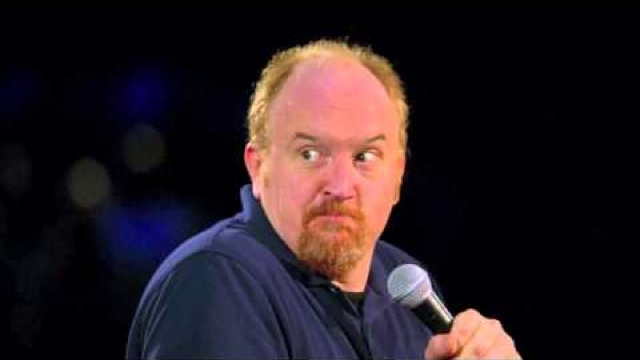
louis c.k. scrunch face

Normally I write about impact mindfulness in the public realm. That is, how what we do (or don’t do) impacts people and planet directly. Today I thought I would take the concept behind the closed doors of our private lives and talk about impact mindfulness when no one’s looking.

Even though doing so makes my face scrunch up like Louis C.K.’s when he’s about to tell a joke that touches on ground that is a bit, well, touchy.

Because I don’t like anyone prying around in my GD private life…and I suspect neither do you.

After all my private life is mine…it doesn’t impact anyone or thing else…or does it?

I believe that idea is worth examining.

We generally judge our private lives on religious grounds, don’t we? That is, whether or not our conduct earns us a ticket to the good or bad place. So the motivation for doing or not doing in private is more about what happens in the next life than it is about what happens in the here and now.

But I really believe that’s a shitty way to govern one’s private conduct. Based on what happens in some world beyond the present that we’ve been told about in a book that we don’t know for sure whether it’s full of it, or not? I mean come on…there’s got to be a better reason than that…doesn’t there?

Maybe so…and that reason could quite possibly be…

IMPACT.

Let’s use strictly as “hypothetical examples” (since lord knows you nor I could ever be consumers of such sinful activities) cocaine use and pornography. Actually these “hypos” could serve as crude substitutes for many other “sins” that we might potentially engage in privately.

So, what are the impact implications of recreational cocaine use? Well, I like to think of these impact implications in the private realm more along the lines of “impact reverberations” or “contributory impacts.” Sure, apart from my own health and sanity, my isolated use of cocaine doesn’t have much impact in the scheme of things. But it does contribute to the existence of a “trade” or industry that wreaks a whole lot of havoc on our world. Okay, maybe you are thinking it’s not the industry itself that causes the problem, but the illegality of it…I could get on that train with you. But let’s avoid all that since, as you’ll remember, this is just a hypo.

So, when you look at it along those lines, yes indeed my private action does have a public impact.

Same goes with pornography. I don’t know how you might feel about the idea of pornography being highly exploitative of the female, or a degradation of the sanctity of sex, but just in case you might feel that it has negative connotations for both…your consumption of it certainly does reverberate or contribute towards the existence of a fairly heinous industry.

In other words, if there was no demand for either, including yours, then neither industry would exist. And the negative implications of both would vanish.

I know what you’re thinking, since the same thought has passed through my rationalization-seeking mind. And that is, what I do doesn’t amount to a hill of beans in the grand scheme of things. That’s the same rationalization one can make about not voting…that my vote just doesn’t really count.

Oh, but deep down inside we know that it does…

I have to tell you it pains me to write this. That’s because I don’t want this idea for impact mindfulness invading my private space. I would much rather keep it out there where the world can see…relegated to save the world and feed the hungry type activities. But really what we do, or are capable of doing, in the public space is in large part a reflection of what we do, or are capable of doing, in private. Since our private lives are a reflection, in large part, of who we really are. That is, our private conduct largely shapes our view of the person we see in the mirror each morning…and that’s an impact worth paying attention to.

Our private conduct largely shapes our view of the person we see in the mirror each morning…and that’s an impact worth paying attention to.

So, the point of this post?

Impact mindfulness when no one’s looking is relevant and might just be a more inspirational means of self-regulating your private conduct than what could possibly happen to you after you’re gone!

Filed Under: Impact over Interest Tagged With: impact mindfulness and private conduct, impact over interest

  • « Previous Page
  • 1
  • …
  • 39
  • 40
  • 41
  • 42
  • 43
  • …
  • 46
  • Next Page »

Connect with RM

Revolutionary Misfit social media connections...

  • Facebook
  • Pinterest
  • Tumblr
  • Twitter
  • Impact Mindfulness
  • The Blog & Podcast
  • Books

Copyright © 2026 · Parallax Pro Theme on Genesis Framework · WordPress · Log in